
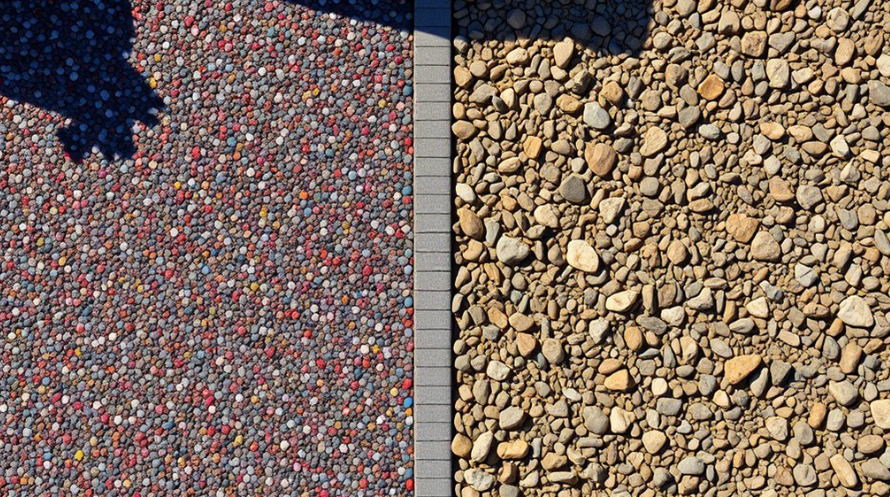
Resin bound vs resin bonded comes down to how the stone and resin are combined. Resin bound driveways are made by mixing aggregate with resin before laying, which creates a permeable, smooth surface. Resin bonded driveways are made by scattering dry stone onto a layer of wet resin, which creates a rough, non-permeable surface. That one difference changes drainage, planning rules, grip, cost and lifespan. This guide explains both systems in plain terms so you can decide which resin driveway suits your home.
What Is a Resin Bound Driveway?
A resin bound driveway is a permeable surface made by mixing dried aggregate with a clear UV stable resin in a forced action mixer, then trowelling the wet mix over a prepared base.
Every stone is fully coated before it is laid, so nothing sits loose on the surface. The mix is normally laid 15mm to 18mm deep over tarmac or concrete, and it cures into a firm, level finish with no joints or gaps. Because the surface is smooth, it is comfortable underfoot and easy for pushchairs, wheelchairs and mobility scooters to cross.
Resin bound is also the more flexible option visually. Aggregate blends can be matched to brick, render or stonework, and borders can be picked out in a contrasting colour. Most homeowners in Trafford choose it for full driveway replacements, and it can be extended into paths and patio areas for a continuous finish. See our resin bound driveways in Sale for finished examples.
What Is a Resin Bonded Driveway?
A resin bonded driveway is a non-permeable surface created by spreading resin across the base and broadcasting dry aggregate onto it while the resin is still wet, so the stone bonds to the top layer only.
The result is a thin coating, usually 3mm to 6mm deep, with a rough texture similar to traditional gravel that cannot move underfoot. That texture gives excellent slip resistance, which is why resin bonded is often specified on steep drives, ramps and access slopes where grip matters more than a smooth finish.
Because only the base layer is bonded, the surface does not let water through. Any rainfall runs across the top and has to reach a gully, a drainage channel or a soakaway. Resin bonded is quicker to install and cheaper per square metre, so it is a common choice where budget is tight or an existing drainage system is already in place.
Is Resin Bound Permeable?
Yes, resin bound is permeable. Water passes through the small voids between the coated stones and drains into the sub base below instead of running off the surface.
This matters for two reasons. First, permeable surfaces fall within Sustainable Drainage Systems guidance, so a correctly built resin bound driveway usually avoids the planning permission that applies to impermeable front gardens over five square metres. Second, water that drains away does not sit on the surface, which means fewer puddles, less staining and a lower risk of ice forming in winter.
The permeability comes from the whole build up, not just the top layer. The resin bound mix needs to sit on a permeable base such as open graded asphalt or a suitable no fines concrete. If it is laid over sealed concrete, the water reaches the base and has nowhere to go. Our driveway installation in Sale always starts with a base survey for this reason.
Resin Bonded Driveway Problems
The most common resin bonded driveway problems are loose stone shedding, standing water, patchy coverage and a shorter working life than resin bound.
- Loose stone. Only the underside of each stone is held in place, so aggregate gradually works free and is carried into the house or the lawn.
- Standing water. The surface is not permeable, so poor falls or a blocked gully lead to pooling and, in cold weather, ice.
- Patchy coverage. If the stone is broadcast too slowly or unevenly, bare resin shows through and the finish looks blotchy.
- Yellowing. Lower grade resins are not UV stable and can discolour where the drive gets direct sun.
- Moss and algae. The rough texture traps organic debris, so shaded drives need more frequent cleaning.
None of these rule the system out. Most are avoidable with a sound base, correct falls, a UV stable resin and an even broadcast rate. They are simply the trade offs that come with a thin, non-permeable coating.
Resin Bound vs Resin Bonded Compared
The table below sets the two systems side by side on the points homeowners ask about most.
| Feature | Resin Bound | Resin Bonded |
|---|---|---|
| Permeability | Permeable, SuDS compliant | Non-permeable, needs drainage |
| Finish | Smooth and level | Rough and textured |
| Depth | 15mm to 18mm | 3mm to 6mm |
| Loose stone | None | Sheds over time |
| Typical lifespan | 15 to 25 years | 8 to 12 years |
| Relative cost | Higher | Lower |
| Best suited to | Driveways, paths, patios | Slopes, ramps, budget jobs |
Which Resin Driveway Is Best?
For most domestic driveways, resin bound is the better option because it is permeable, smoother, keeps its appearance longer and carries no loose stone.
It suits full driveway replacements, front gardens where drainage rules apply, households with pushchairs or mobility needs, and anyone who wants a driveway that still looks tidy after a decade. The higher up front cost is usually offset by the longer lifespan and the low maintenance, which is little more than an occasional sweep and a gentle wash.
Resin bonded is the better option in narrower cases. Choose it for a steep drive or ramp where maximum grip is the priority, for a surface refresh over sound existing tarmac, or where drainage is already handled and the budget is fixed. It is also worth considering for smaller paths and steps that see light foot traffic.
If you are still weighing it up against other surfaces, our guide to block paving in Sale covers a third option that works well on drives with heavy vehicle turning.
Get a Resin Driveway Quote in Sale
Sale Driveways and Patios installs both resin bound and resin bonded surfaces across Sale, Urmston, Altrincham and the wider Trafford area. We survey the existing base, confirm whether it can carry a permeable build up and set out the costs for each option before any work is booked. Request a free driveway quote in Sale and we will come out at a time that suits you.
Frequently Asked Questions
How long does a resin bound driveway last?
A resin bound driveway laid on a sound base typically lasts 15 to 25 years. Lifespan depends on base preparation, resin quality and traffic levels rather than the aggregate itself.
Can resin be laid over an existing driveway?
Yes, if the existing tarmac or concrete is stable, clean and free of movement. Cracked or sinking bases must be repaired or replaced first, otherwise the fault will show through the new surface.
Is a resin driveway slippery when wet?
Neither system is slippery in normal use. Resin bonded has more surface texture and higher slip resistance, which makes it the usual choice for steep drives and ramps.
Do I need planning permission for a resin driveway?
A permeable resin bound driveway normally does not need planning permission in England. A non-permeable resin bonded driveway over five square metres does, unless water is directed to a lawn, border or soakaway.