 Skip to content
Choosing a new driveway is one of those decisions that feels bigger than it should. It is a lot of money, it is right at the front of your home, and once it is down, you are looking at it every single day for years. So it is no surprise that two names come up again and again when people compare driveway options: resin and block paving.
Both are excellent choices, and both are hugely popular across Manchester and the surrounding areas. But they are quite different once you look past the surface. In this guide we will compare resin and block paving on the things that actually matter, cost, lifespan, maintenance and looks, so you can work out which one gives you better value for your home.
The Quick Answer
If you want low maintenance, a smooth finish, and a modern look, resin usually offers better value over time. If you want a classic appearance, easy spot repairs, and a lower upfront cost, block paving often wins.
There is no single right answer, and the best choice depends on your budget, your property style, and how much upkeep you are happy to take on. Let us break it down properly.
What Is a Resin Driveway?
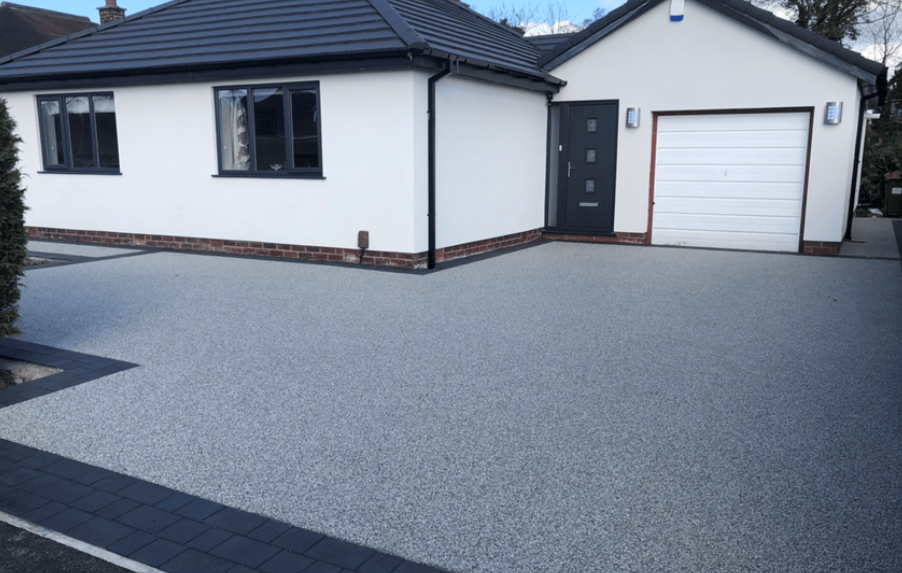
A resin driveway is made by mixing natural aggregate stones with a clear resin, then spreading the blend across a solid base. The result is a smooth, seamless surface with no gaps or joints.
There are two types worth knowing about. Resin bound is the higher quality option, where the stones are fully coated and laid smooth, giving a permeable surface that lets water drain through. Resin bonded is where stone is scattered over wet resin, creating a rougher, non-permeable finish. For most driveways, resin bound is the one people mean, and the one we would recommend.
What Is a Block Paving Driveway?
Block paving uses individual blocks, usually concrete or clay, laid by hand in a pattern over a compacted sub-base and sand. The blocks lock together to form a strong, flexible surface.
Because each block is separate, you get a lot of freedom with colours, shapes, and patterns. Herringbone, basket weave, and stretcher bond are all classic layouts, and you can mix colours to create borders or features. It is a look that suits traditional and modern homes alike.
Cost: Which Is Cheaper?
Cost is usually the first thing people ask about, and it is where the two options differ most.
Block paving generally has a lower upfront cost per square metre than resin bound. If your budget is tight and you want a quality driveway without stretching too far, block paving is often the more affordable starting point.
Resin bound tends to cost more to install, partly because of the materials and partly because it usually needs a solid base underneath, such as tarmac or concrete. However, the story changes when you look at the long term. Resin needs far less maintenance and rarely needs relaying, so the higher upfront price can even out over the years.
The honest answer is that neither is cheap, and prices vary a lot depending on the size of your drive, the condition of the ground, and the finish you choose. This is exactly why a proper site survey matters, as it gives you a real figure rather than a rough guess.
Lifespan: Which Lasts Longer?
Both driveways are built to last, and with proper installation you can expect many years of service from either.
A well-laid block paving driveway can last a very long time, and one of its big advantages is that individual blocks can be lifted and replaced if they crack or stain. That makes long-term repairs simple and affordable.
A quality resin bound driveway also has a long life when it is laid on a good base by an experienced team. The seamless surface means there are no joints for weeds or frost to attack, which helps it stay looking good for longer.
The key point with both is installation quality. A cheap, rushed job will fail early no matter which material you pick, which is why choosing a trusted local installer matters more than the material itself.
Maintenance: Which Is Easier to Look After?
This is where resin really pulls ahead for a lot of homeowners.
Resin bound surfaces are smooth and seamless, so there is nowhere for weeds to grow. A quick sweep and the occasional rinse is usually all it takes to keep it looking fresh. There is no sand to top up and no blocks to re-level.
Block paving needs a little more attention. Weeds can grow up through the joints, the sand between blocks needs topping up now and then, and blocks can shift or sink over time. It is all very manageable, but it is more hands-on than resin. Regular sealing and the odd wash will keep block paving looking its best.
If you want a driveway you can mostly forget about, resin has the edge. If you do not mind a bit of seasonal upkeep, block paving is perfectly easy to maintain.
Looks and Style
This one comes down to taste.
Resin gives a clean, modern, seamless finish. It suits contemporary homes beautifully and comes in a wide range of natural stone colours. Many people love how smooth and uniform it looks.
Block paving offers a more traditional, textured appearance with lots of pattern and colour options. If you have a period property or you love a classic kerb appeal, block paving often feels like the natural fit.
Both can lift the whole front of your home and boost kerb appeal, which is worth remembering if you plan to sell in the future.
Drainage and Planning
Here is a practical point that catches people out. In the UK, if you use a non-permeable surface and the water drains onto the road, you may need planning permission. Permeable surfaces that let water soak away naturally usually do not.
Resin bound is permeable, which makes it a strong choice for meeting drainage rules without extra hassle. Block paving can also be laid with permeable options, so both can be done correctly, but it is something a good installer will always plan for.
So, Which Offers Better Value?
Value is not just the price on day one. It is the price spread across years of use, maintenance, and repairs.
Choose resin if you want low maintenance, a modern seamless look, and easy drainage, and you are happy to pay more upfront for less hassle later. Choose block paving if you want a lower starting cost, a classic look, and the ability to repair single blocks easily over time.
Both are genuinely good investments when installed properly. The smartest move is to get expert advice on your specific property before you decide.
At Sale Driveways and Patios, we install both resin driveways and block paved driveways across Manchester, and we will always give you honest guidance on which suits your home and budget. You can explore our full range on our driveways page.
Frequently Asked Questions
Is resin or block paving cheaper? Block paving usually has a lower upfront cost, while resin often costs more to install. Over time, resin can offer better value because it needs less maintenance and repair.
Which lasts longer, resin or block paving? Both last many years when installed well. Block paving allows easy single-block repairs, while resin resists weeds and joint damage thanks to its seamless surface.
Which driveway needs the least maintenance? Resin bound needs the least upkeep. It has no joints for weeds and only needs occasional sweeping and rinsing. Block paving needs sand topped up and joints weeded now and then.
Do I need planning permission for a driveway? You may need permission for non-permeable surfaces that drain onto the road. Permeable options like resin bound usually avoid this, but always check with your installer.
Not sure which driveway is right for your home? Book a free site survey with Sale Driveways and Patios and get honest, expert advice Customised to your property. Call us on 07723 719671 today.
